The war in Sudan began in Khartoum on 15 April 2023 and spread across the country. Three years on, the World Health Organization
reports that 37 per cent of health facilities across Sudan’s 18 states are non-functional, and has verified more than 200 attacks on health care since the fighting started. In conflict-affected areas, hospitals are running partially or have closed altogether after their buildings and equipment were destroyed.
Empty space, drag to resize
“Surgical care depends on much more than clinical knowledge”
Empty space, drag to resize
Dr. Shima Alsheikh was working in the plastic surgery department of a government teaching hospital in Khartoum when the war began. The department had no dedicated emergency theatre and none of the infrastructure needed for major plastic surgery emergencies, so serious cases had to be referred to other hospitals.
One patient from that ward has stayed with her. A young girl had sustained burns, and the unit had arranged with a charitable organisation to treat her free of charge. She arrived about ten days after the injury with her wounds already infected, and became one of the main patients on the surgical ward. Two debridements later her condition had improved sharply, and the team was preparing her next procedure when the fighting reached the city. The hospital closed before it could be done.
Dr. Alsheikh never heard from her again. The girl’s mother had no phone, and there was no way to reach most of their patients afterwards. She still thinks about her and hopes she is safe.
That is why she says surgical care depends on much more than clinical knowledge. The obstacles can begin before a patient reaches a hospital at all, and they continue through treatment.
“I liked working with my hands and seeing a change that was immediate and tangible”
Medicine was not her own choice. Her father, a doctor himself, wanted his eldest daughter to follow him into it, and she found herself on that path.
Surgery was different. She was drawn to it during her surgical rotation as an intern, working under a senior who encouraged her to hold her first scalpel. She had always thought of surgery as a difficult career, and began to see that it could be difficult and enjoyable at the same time. She could lose track of time in theatre, and watching patients recover mattered more still.
What held her there was the immediacy. “I liked working with my hands and seeing a change that was immediate and tangible,” she says, rather than prescribing and waiting for a result.
After the war she moved to another part of the country and took a post as a Medical Officer in General Surgery at a government teaching and referral hospital. The department was busy and short of resources, staffed by one general surgeon, three residents, four medical officers and four interns.
Her week ran on a 24-hour on-call shift, post-call rounds and handover, referral clinics, elective operating lists and inpatient follow-up. When the ward was full, rounds and handover alone could take four to eight hours. The caseload covered appendicitis, cholecystitis, diabetic foot and thyroid disease, breast tumours, lipomas, sebaceous cysts, abscesses, burns and anorectal conditions, alongside patients arriving after road traffic accidents and stab injuries.
What she valued most about the post was the range. “As a junior doctor, you encounter a large variety of surgical problems and learn to work carefully and practically, especially when resources are limited,” she says.
What kept her going when resources ran short was seeing the difference the team could still make. A patient’s smile or a kind word after treatment was enough to make the difficulty worthwhile. The work taught her to stay calm, think practically and do her best with whatever was available.
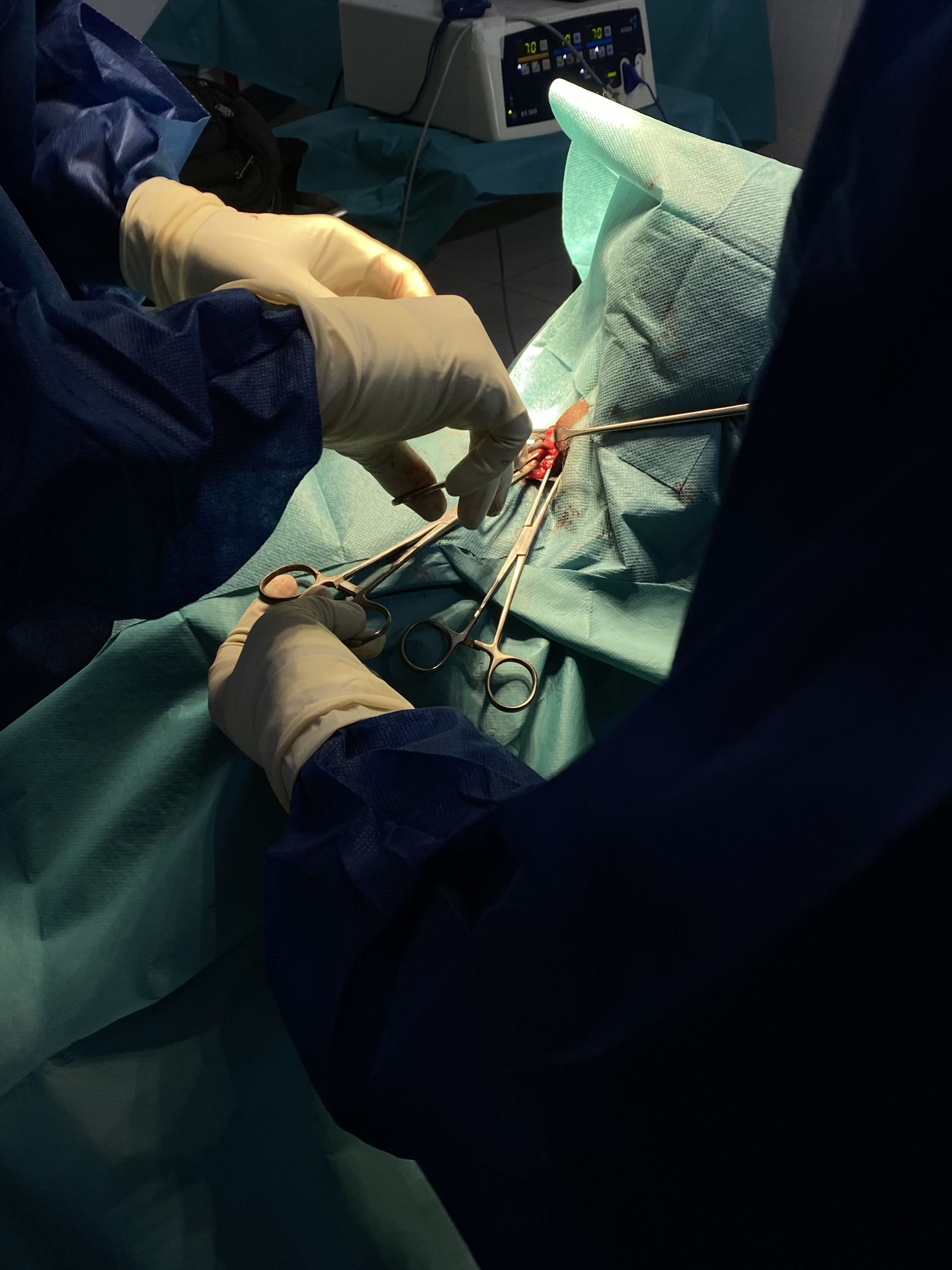
An elective operating day in General Surgery, Sudan.
Empty space, drag to resize
“SURGhub gave me an accessible way to continue learning”
Empty space, drag to resize
She came across SURGhub on LinkedIn, looked into the platform, and found courses that lined up with what she wanted to work on. They were also free, which caught her attention immediately.
She has since completed nine of them: patient-centred care, Z-plasty, essential burn care, pressure sore reconstruction, breast reconstruction, microsurgery and workhorse flaps, safe clinical handover, research methodology, and trauma and disaster team response.
She fitted them around clinical work, using days off during the week and about an hour in the evenings to get through the modules. The plastic surgery courses were a deliberate choice. She was working mainly in general surgery and had not had another chance to work in plastics, so she wanted to build some foundation in the specialty while she could. “SURGhub gave me an accessible way to continue learning,” she says.
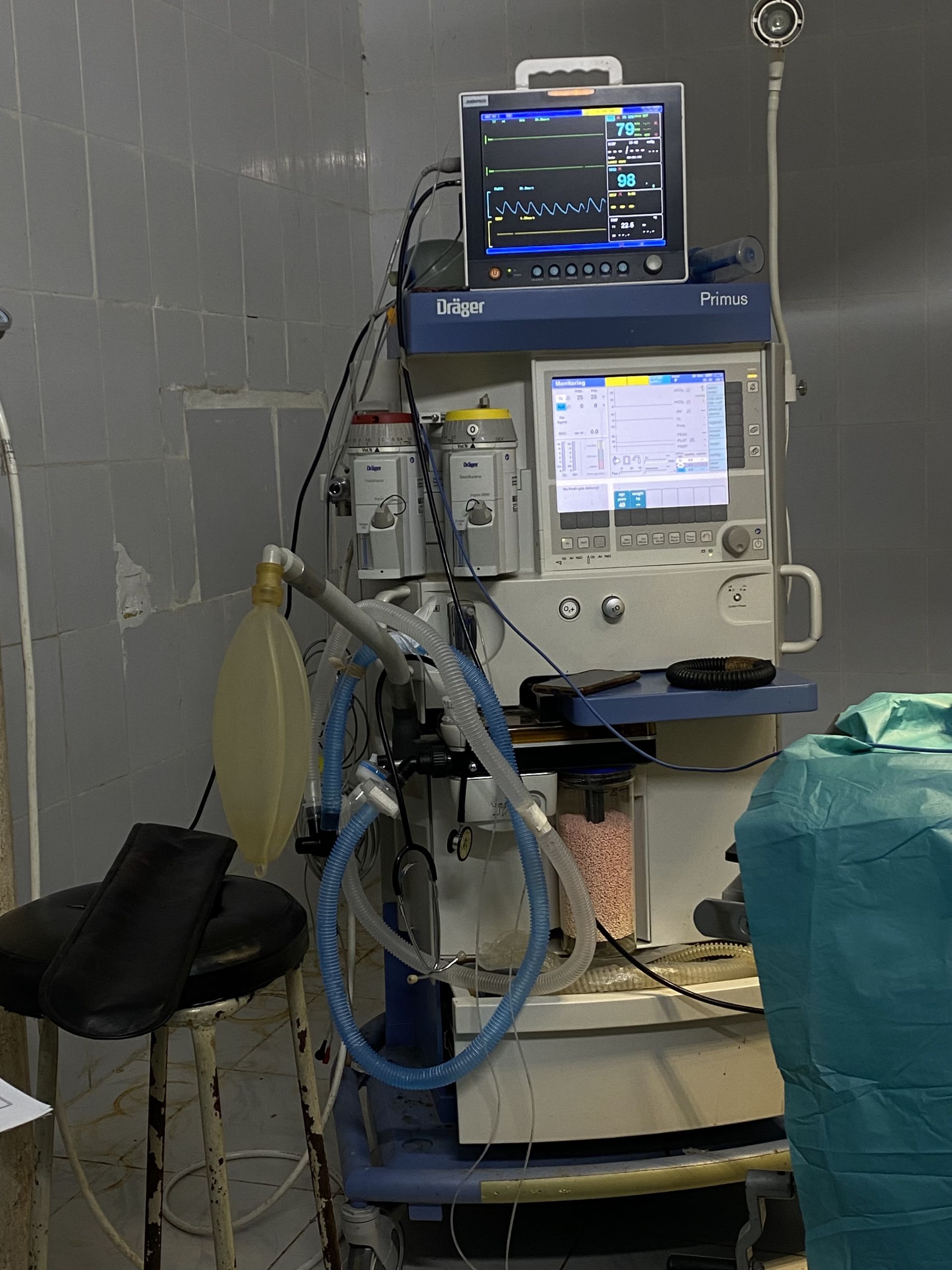
The anaesthetic machine in theatre at the hospital where Dr. Alsheikh worked in General Surgery.
Empty space, drag to resize
“I subsequently participated as a co-author in my first research project”
Empty space, drag to resize
She is careful about what she claims for the courses. She cannot point to a patient whose treatment was directly changed by the plastic surgery modules, because she has not yet had the chance to work in plastics since completing them.
Others changed her practice more directly. She had sometimes found it difficult to hand over patient information clearly and systematically, and after the safe clinical handover course she began using a structured approach as a matter of routine. The trauma and disaster team response course helped her organise the principles of approaching different types of trauma, and she found herself applying them during emergencies.
The clearest change came from the research methodology course, developed by CANECSA. She had a general interest in research but no clear sense of how to approach a project. “I subsequently participated as a co-author in my first research project with my colleagues,” she says: a cross-sectional study on medical research among healthcare providers in Sudan, which was published by Springer Nature.
It was her first research project and her first published work. For her, that is the point. “Sometimes the impact of a course is not one memorable patient or one particular case,” she says, “but a change in the way you think and work with patients afterwards.”
“Being a good surgeon is not only about knowing how to operate”
One patient has stayed with her longer than any other. A woman she calls M had undergone surgery for bladder cancer and came onto the surgical ward with a run of serious complications. She spent around four months moving between hospital and home, and two operations could not resolve them.
Dr. Alsheikh took on much of her wound and stoma care. M would ask for her by name when her dressings needed changing, and Dr. Alsheikh tried to make each change as comfortable as she could, never wanting M to feel that caring for her was a burden. M was patient and kind throughout, and able to smile when she was clearly suffering. Her husband supported her, and supported the doctors too.
M returned to the emergency department in poor condition, was admitted to intensive care, and died two days later.
“She taught me that being a good surgeon is not only about knowing how to operate,” Dr. Alsheikh says. “It is also about how you treat a person when they are frightened, uncomfortable and vulnerable.”
Dr. Alsheikh is currently looking for a post where she can continue her clinical and surgical work. Longer term, she hopes to use what she learns to contribute to surgical training and clinical practice in Sudan.
Her advice to students starting out is to start early. Work out your interests, set professional goals and identify your field as soon as you can, because having a direction buys you time to build knowledge and skills in it. And continuous learning, she adds, does not have to be expensive or depend on formal training.
Empty space, drag to resize
Shima's Top Course
Research Methodology Course (RMC)
Topic: Learn how to turn clinical ideas into valid research questions, critically analyse literature, and apply correct statistical methods to build real studies.
Description: This course will teach you how to choose and apply the correct methods. How to develop your ideas into a valid research question, find relevant literature and analyze the results correctly.
"It was my first real research project and my first experience contributing to a published study."
- Dr. Shima Alsheikh
This profile is part of our Impact Stories series, highlighting how SURGhub learners are applying global surgical standards to local challenges. Our mission is to ensure that high-quality surgical education is a bridge—not a barrier—to saving lives worldwide.
The views and opinions expressed in this article are those of the interviewee and do not necessarily reflect the official policy, position, or standpoint of SURGhub or its partner organisations.